Moving well in East Sheen: a physiotherapist’s guide

Living in East Sheen makes an active life relatively easy. Richmond Park is on the doorstep, the river is close enough for a morning walk or run, and there is a strong local community built around movement, sport and wellbeing.
As a physiotherapist and the founder of CORE LDN, I see the other side of that active life too. The knee that begins to complain halfway around the park. The Achilles tendon that was perfectly happy until the running distance crept up. The back that feels fine on the bike but less convincing when you stand up afterwards.
These problems rarely mean that you need to stop moving altogether. More often, they are a sign that something in the balance between load, strength, recovery and technique needs a little more attention.
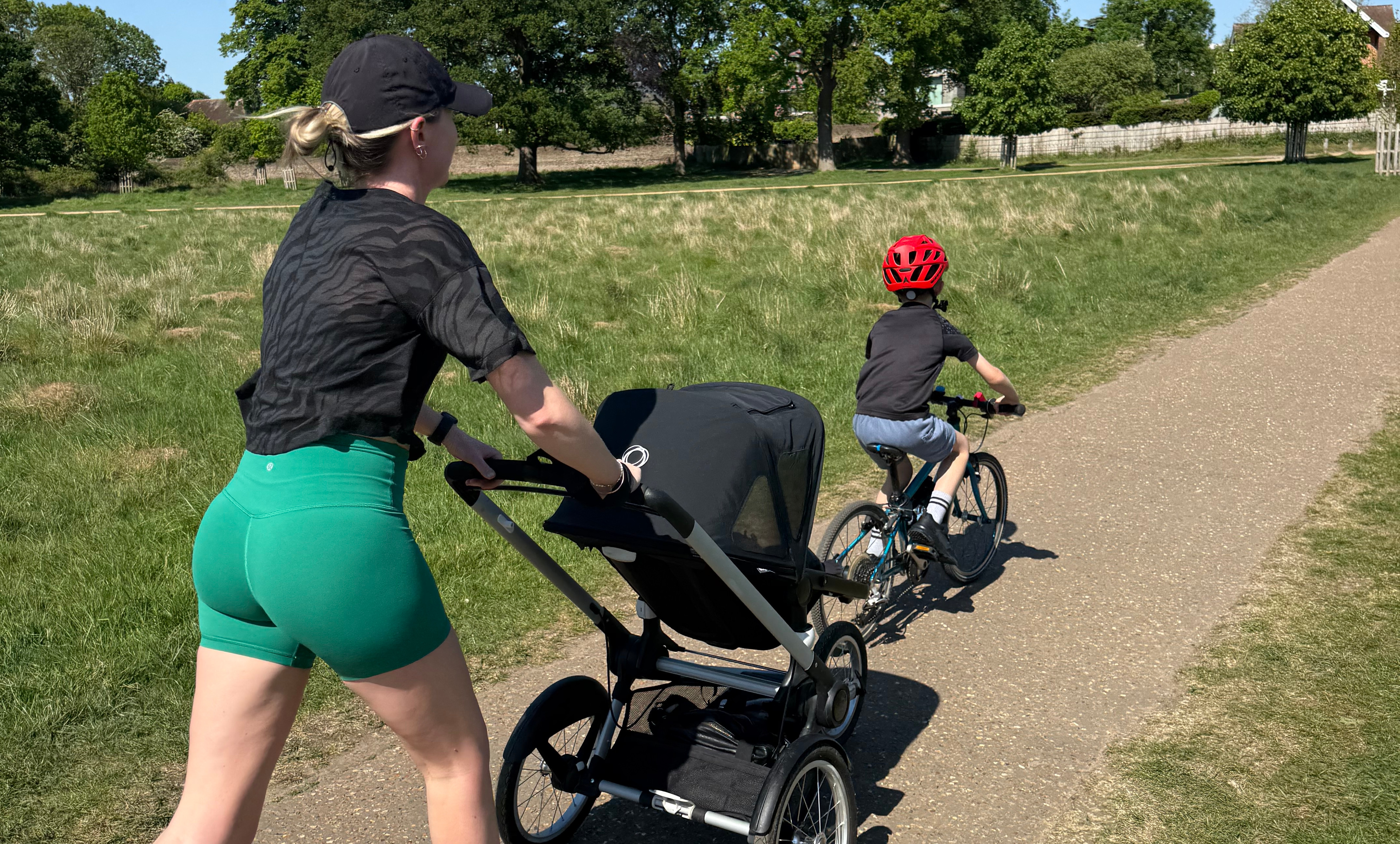
Running and walking in Richmond Park
Richmond Park is one of the best places in London to run and walk. It also asks rather more of the body than a treadmill or a flat pavement.
The hills increase the load through the calves, Achilles tendons, knees and hips. Uneven trails require more control through the feet and ankles. Downhill sections place different demands on the quadriceps and knees, particularly when fatigue begins to change the way you move.
None of this is a reason to avoid the park. Bodies are designed to adapt to varied terrain. The difficulty usually comes when the demand increases more quickly than the body has had time to adapt.
A longer route, an extra run each week or a sudden enthusiasm for hills can all be perfectly manageable changes individually. Introduce them together and your tendons may submit a formal complaint.
If you are increasing your running or walking, change one variable at a time. Add a little distance before adding more speed or more hills. Give your body the opportunity to respond, rather than testing how much it will tolerate in a single week.
The river: flat does not necessarily mean effortless
The paths beside the Thames can feel easier because they are flatter, but repetitive movement still creates load.
Long, steady routes may reveal a lack of endurance through the calves, hips or trunk that is less obvious during shorter sessions. Some paths also have a slight camber or uneven surface, which can subtly change the way force travels through the legs when repeated over several kilometres.
Pay attention to symptoms that appear at roughly the same point on every walk or run. If your knee consistently begins to hurt after 30 minutes, for example, the timing is useful information. It may indicate that a particular muscle group is tiring, your movement pattern is changing or the current distance is simply beyond what the area can comfortably manage.
Stopping for a few days may settle the symptoms, but it does not always address why they appeared. Building the appropriate strength and gradually restoring capacity is generally more useful than moving between complete rest and repeated flare-ups.
Cycling around Richmond Park and south-west London
Cycling brings its own particular collection of aches. Knee discomfort, lower-back stiffness, neck tension and wrist pain are all common, especially as time in the saddle increases.
Bike position matters, but it is rarely the entire picture. Two people can ride the same setup and experience completely different symptoms because their mobility, strength, injury history and riding habits are different.
A physiotherapy assessment should therefore look beyond the painful area. Knee pain may relate to the way the hip controls the leg, the position of the foot, a recent increase in hill work or the relationship between the rider and the bike. Neck discomfort may be influenced by upper-back mobility, shoulder endurance and how long the body is being asked to maintain one position.
The aim is not simply to make the current pain disappear. It is to understand what your body needs in order to tolerate the riding you want to do.
Strength supports the things you enjoy
Running, cycling and walking all improve fitness, but doing more of the activity does not always build every type of strength required to support it.
Runners often benefit from focused calf, hip and single-leg strength. Cyclists may need work through the trunk, upper back and hips to balance the prolonged position they hold on the bike. For anyone walking longer distances, foot strength, balance and lower-limb endurance can make the movement feel more comfortable and controlled.
Pilates can be particularly helpful when it is used with a clear purpose. At CORE LDN, we use physiotherapy-led Pilates to help people develop strength, control and awareness around their individual movement patterns. It is not about achieving a perfect position. It is about giving the body more options and a greater capacity to adapt.
That might mean improving hip control for a runner, rebuilding strength after an injury or helping a cyclist feel less compressed through the back and shoulders.
Working with our local movement community
Good care rarely happens in isolation. We value working with other local businesses and professionals who bring their own expertise to the way people move.
Earlier this year, we partnered with Up & Running East Sheen for our Run Smarter event. The evening began with a relaxed local 5K and continued with a discussion between physiotherapy, sports medicine and running specialists about injury prevention, footwear, training load and performance.
It reflected the way I believe active people are best supported. A physiotherapist can assess movement, diagnose injury and guide rehabilitation. A knowledgeable running specialist can advise on footwear and the practical realities of training. A sports medicine consultant can provide further investigation or medical input when needed.
Bringing those perspectives together gives someone a much clearer route forward than treating each part in isolation.
When does a niggle need attention?
Not every ache requires physiotherapy. Bodies respond to unfamiliar movement, and temporary stiffness after a longer walk, run or ride can be entirely normal.
It is worth seeking advice when:
Pain is becoming more noticeable rather than settling.
The same symptom returns whenever you increase your distance or intensity.
You have started changing the way you walk, run or cycle to avoid discomfort.
Pain is affecting sleep or ordinary daily movement.
You feel weakness, instability, persistent pins and needles or numbness.
You are returning to activity after an operation or significant injury.
You are resting repeatedly but the problem continues to return.
Early assessment does not necessarily mean being told to stop. In many cases, it allows you to
keep moving with a clearer understanding of what to adjust while the problem settles.
Physiotherapy in East Sheen
At CORE LDN, our approach begins with understanding the whole picture: what you are feeling, how you move, what has recently changed and what you want to return to.
Our physiotherapy in East Sheen combines considered assessment, hands-on treatment and progressive rehabilitation. Where appropriate, we use strength work and physiotherapy-led Pilates to bridge the space between feeling better and being properly ready for your usual activity.
Recovery should not end when the pain becomes quieter. The more useful goal is to leave your body better prepared for the park, the river, the bike and everything else you would rather be doing.
CORE LDN is based at 341 Upper Richmond Road West, East Sheen, London SW14 8QN.
Thank you for reading, Claire. Founder of CORE LDN.
Restore. Strengthen. Evolve.
Comments